The explainer film has been watched 4,000 times. Three people have clicked through to the product page. The sales team says customers still don’t understand what it does. The animation is technically fine — smooth, clear visuals, professional voiceover. And it isn’t working.
This is not an animation problem. It is a brief problem.
The feature list brief
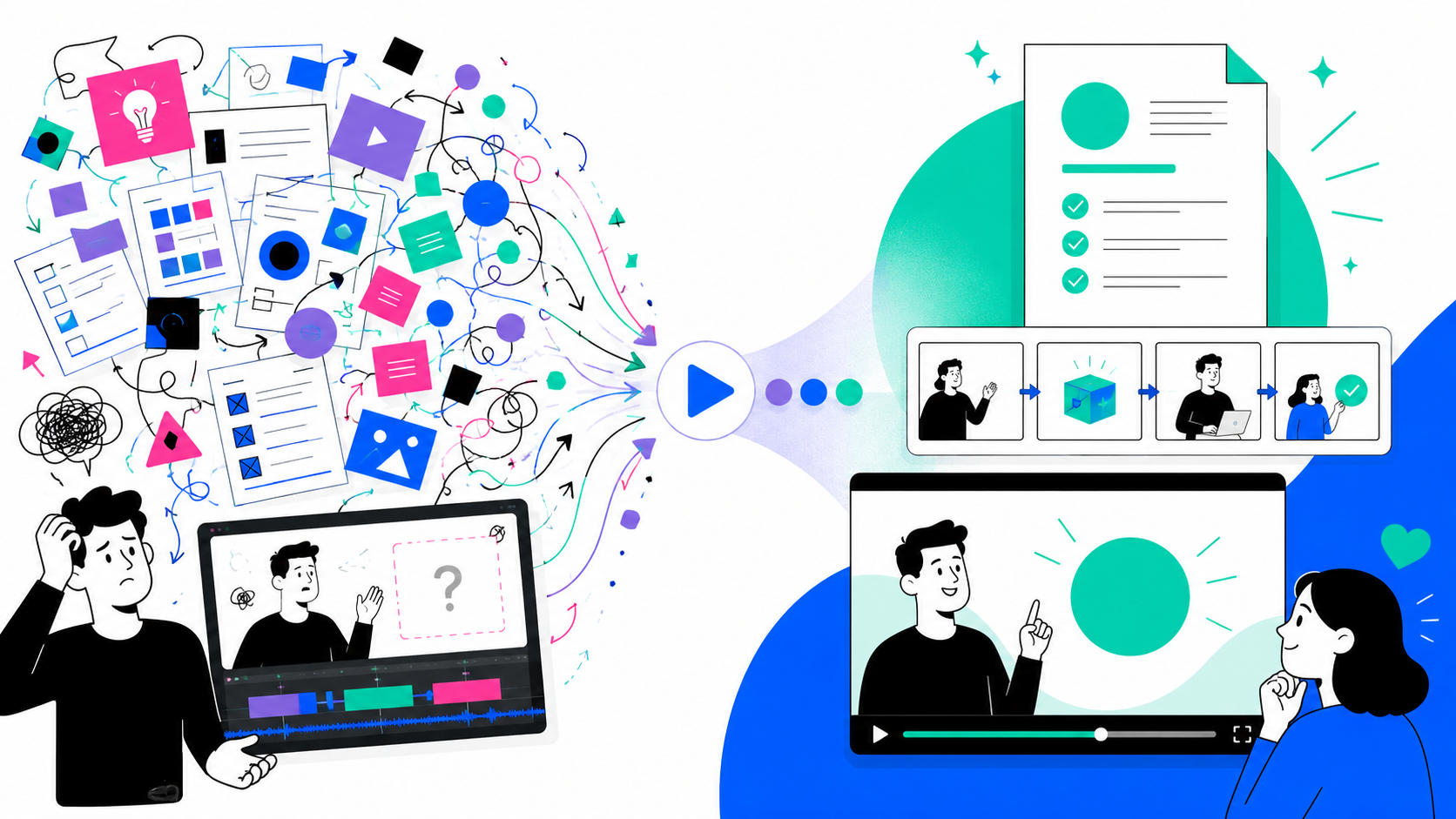
The most common explainer brief arrives as a list of things the product or service does. Seven features. Eight benefits. A section on the technology. A section on the team. The brief asks the studio to “make it engaging” and “keep it under two minutes.”
This brief will produce an explainer film that covers everything and explains nothing. It will feel like a brochure with motion. It will be watched once by people who already know about the product and ignored by the people it was made for.
The problem is that the brief describes the product from the company’s perspective, not from the viewer’s perspective. No one wakes up wanting to understand your product’s feature set. They wake up with a problem. If the film doesn’t start from that problem, it has already lost the viewer.
The outcome brief
A good explainer brief starts with one question: what must the viewer understand, believe or do after watching this film that they do not currently?
Not: “understand our product.” That is not an outcome. That is a category.
The outcome might be: “Understand that manual data entry is the bottleneck in their current process, and that our software eliminates it.” Or: “Feel confident enough to request a demo call.” Or: “Be able to explain to their manager why this compliance training applies to their role.”
Each of these outcomes produces a completely different film. The first is a problem-solution film. The second is a trust-building film. The third is a motivation film. None of them is a feature list.
One concept per film
One film. One concept. One thing the viewer will understand at the end that they didn’t at the beginning.
The single most common mistake in explainer film production is trying to do too much in one film. The product has five key differentiators. The team wants all five covered. The result is a film that covers all five at thirty seconds each and communicates none of them at the depth required to change the viewer’s understanding.
If there are five things to communicate, the answer is usually five shorter films — each one focused, each one fast, each one deployable at the right moment in a conversation or a journey. This is almost always more effective than one two-minute film that tries to carry everything.
How to write the brief
Before writing anything else, write one sentence: “After watching this film, the viewer will ___.” Fill in the blank with something specific and behavioural — not “understand our product” but “request a demo” or “stop using the manual process” or “feel confident about the compliance requirement.”
Then ask: what is the single biggest obstacle between the viewer and that outcome right now? Is it lack of awareness? Misunderstanding? Scepticism? Fear? The film’s job is to remove that obstacle. Everything in the brief flows from that.
The animation is the last decision in the brief, not the first. Format, length, visual style — these follow from the outcome and the audience. When they lead the brief, the film almost always fails to work.