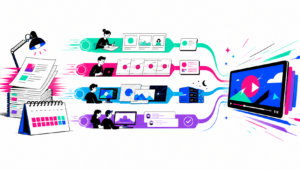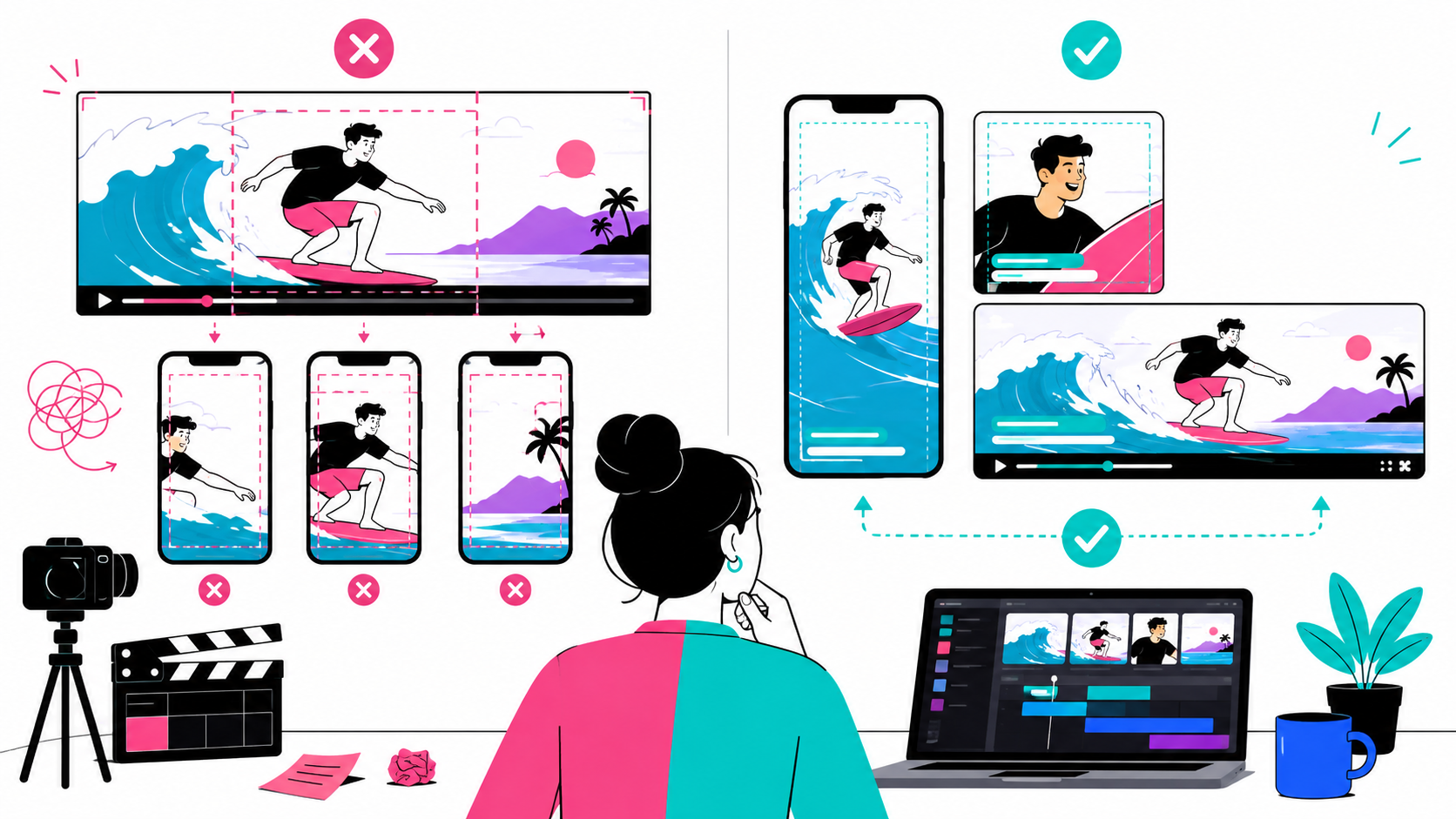
Platform-adapted means taking something made for one context and forcing it into another. Platform-native means building for the context from the first frame.
Most corporate social content is platform-adapted. The corporate film gets cropped. The product video gets subtitles added. The event highlight reel gets cut down to sixty seconds. These things are posted to Instagram and LinkedIn and they perform like what they are — content built for somewhere else.
What platform-native actually means
Platform-native starts with three questions before any production decision is made: where will this be watched, on what device and in what context?
Instagram Reels are watched on a phone, vertically, often without sound, usually while doing something else. The opening frame needs to stop a thumb in motion. The first three seconds need to communicate something worth three more seconds. Subtitles are not optional. The safe zones for text are different from any other format.
LinkedIn video is watched on both desktop and mobile, often with sound, by an audience in a professional mindset. The opening works differently — a direct address or a specific claim works better than a visual hook. Length tolerance is higher. The call to action can be more explicit.
YouTube is watched intentionally, often on a larger screen, with sound, by someone who has specifically chosen to watch something. It behaves more like television than social media. Pre-roll logic applies. Longer formats are viable.
None of these is a crop of the same master file.
What this means in production
Platform-native production means the shot is framed for the platform from the start. A vertical shot is composed for vertical — not a reframe of a horizontal shot. A thumb-stop opening frame is a production decision made in the brief, not a post-production fix. Subtitles are styled for the platform, not added as an afterthought.
This is not a significant cost increase when it is built into the production from the beginning. It is a significant cost increase — and usually an ineffective result — when it is retrofitted at the end.
The most efficient approach is to shoot or animate the master content with platform adaptation in mind from the first frame. Vertical-first framing that can be cropped to horizontal, rather than horizontal framing that cannot be usefully cropped to vertical. Opening frames that work without sound. Text that sits in safe zones for all required platforms.
When adaptation is the right answer
Platform adaptation is the right answer when you have existing hero content — a broadcast film, a product launch video, a corporate event film — and need to extend its distribution to social channels. This is a legitimate and efficient use of existing assets. But it works best when the adaptation is approached honestly: these are secondary social assets derived from a primary piece, not primary social content. The expectations and the brief should reflect that.
When social is the primary channel, build for social from the start. The difference in performance is consistent and measurable. The difference in production cost when built correctly from the brief is smaller than most clients expect.